The Problem With A “Cool” Wedding & Why Authenticity Will Always Outlast Trends
The Planners Perspective
After fifteen years in the wedding industry, we’ve noticed something interesting. The weddings that stay with people are rarely the ones trying to be “cool.” They’re the ones that feel deeply, unapologetically human.
The wedding industry has become increasingly shaped by the culture of trends. What once emerged seasonally through fashion and interiors, from deeply knowledgable and respected trend forecasters, now moves at algorithmic speed across Pinterest, Instagram and TikTok, where aesthetics are endlessly recycled into content, detached from the individuality that once made them compelling.
One month it’s old money styling, then it’s dopamine brights, sculptural florals and now its messy coquette décor. Weddings are at risk of becoming visual performances curated solely for online approval, rather than deeply personal gatherings rooted in atmosphere, memory and real human connection. And the speed of this cycle has created something else too: aesthetic fatigue.
What once felt distinctive quickly becomes overexposed. Beautiful ideas are losing any sense of meaning as they get replicated over and over, whilst individuality has been flattened into sameness.
As planners and designers, we’re constantly encouraged to predict what’s next: What colours are trending, what tablescapes are “in” and just what are the cool couples doing? But after fifteen years designing celebrations intended to feel personal, immersive and deeply lived-in, one thing has become increasingly clear to me:
The more a wedding tries to
feel “cool,” the more likely it is to
lose the very essence that makes
it just that.
Design Should Not Be For Approval
The internet has democratised inspiration in extraordinary ways. Social channels opened up worlds of creativity that were once inaccessible. But they’ve also created an echo chamber.
Scroll long enough and wedding content begins to blur into one another: the same poses, the same styling tropes, the same “editorial” moments recreated endlessly in different locations. What once felt fresh has quickly become visual wallpaper.
As The Guardian recently observed when discussing the wider cultural exhaustion around trends, we are living in an era of “algorithmic sameness”, where aesthetics spread so rapidly that individuality is flattened almost instantly. The wedding industry is sadly not immune to this.
The Algorithm Isn’t Predicting Taste, It’s Reflecting Behaviour
Part of the complexity lies in how trends are now created in the first place. Platforms like Pinterest release annual trend reports based on enormous volumes of search data, what users are pinning, saving and searching for most frequently at a given moment in time. See the latest Pinterest Wedding Trends Report 2026.
These reports are then rapidly circulated across social media, picked up by publications, discussed by planners, and transformed into “must-have” aesthetics almost overnight. But this raises an interesting question: Are these truly future trends, or simply a snapshot of collective behaviour already happening in real time?
Because by the point a trend report is published, absorbed by the industry, replicated by content creators and filtered through thousands of Pinterest boards and Instagram posts, the aesthetic is often already overexposed. The pace of consumption has become faster than the lifespan of the modern wedding itself.
A couple planning a wedding twelve or eighteen months from now can find themselves designing toward a trend cycle that may already feel culturally exhausted by the time their celebration actually arrives. And perhaps this is where the pressure begins: not simply to create something beautiful, but to create something relevant before the algorithm moves on.
The irony, of course, is that the
more people search for
individuality, the more visually
similar things become.
Why “Cool” Is So Often Inauthentic
Psychologists and sociologists have studied the concept of coolness for decades. The conclusion is surprisingly consistent: truly cool people are perceived as autonomous. They are self-directed, unaffected and non-performative.
The Italian concept of sprezzatura, translated as “studied carelessness”, has long been associated with timeless style. It’s the art of making the difficult appear effortless, a kind of studied nonchalance rooted in individuality, instinct and ease. The epitome of cool. And the irony, of course, is that the harder you try to appear cool, the less cool you become.
The moment a wedding is designed primarily to look impressive online, something subtle shifts. Guests can feel it immediately and instantly the whole experience becomes performative rather than personal.
Performance is exhausting.
Presence is engaging.
What People Are Actually Craving
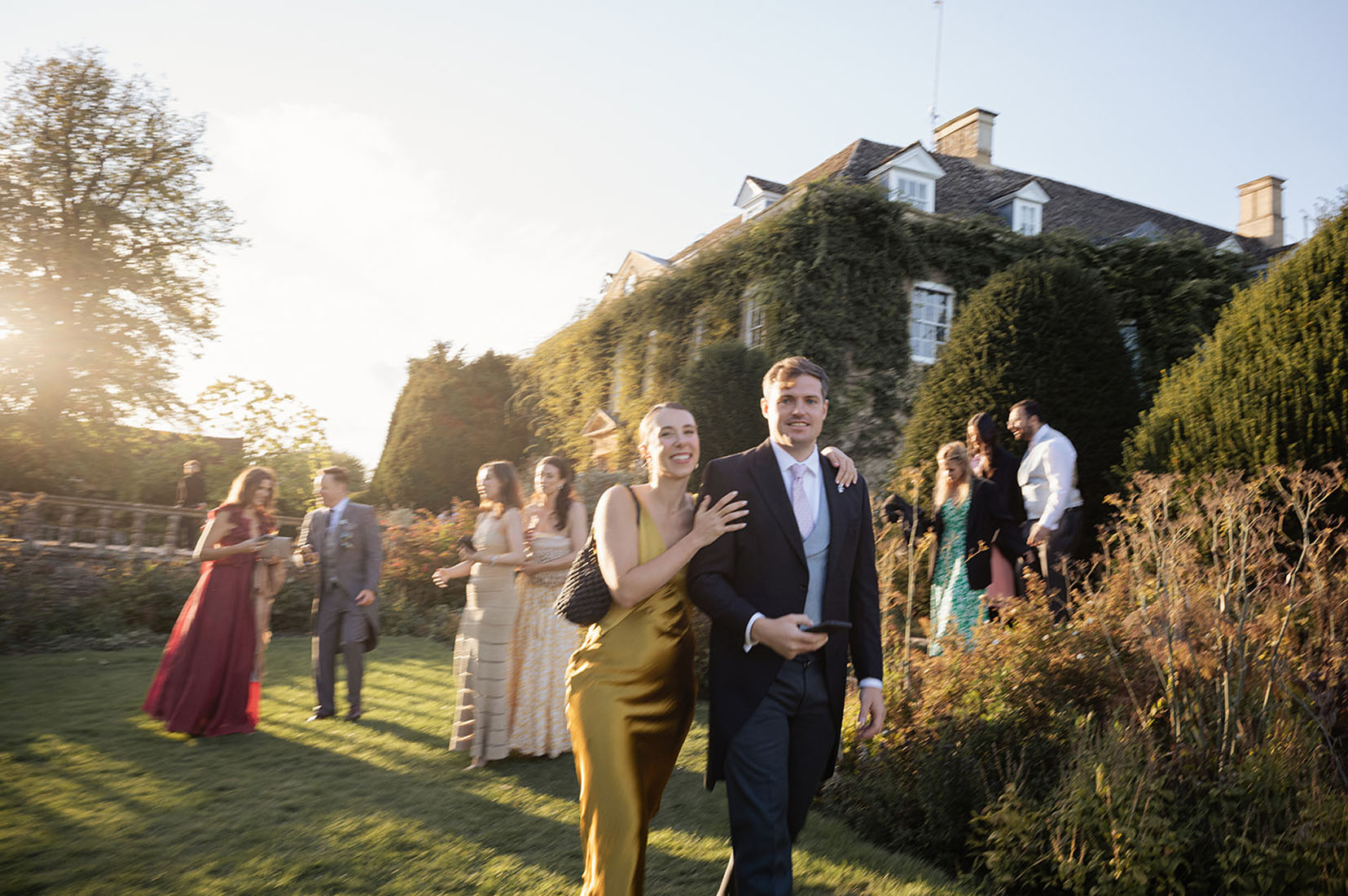
Interestingly, beneath all the noise of trends and aesthetics, the desires we see from our couples are often remarkably consistent. Not cooler weddings, not more performative weddings and not celebrations designed primarily for content. But gatherings that feel more personal, immersive and emotionally intelligent, celebrations deeply connected to place, heritage and story.
We’re seeing more couples move away from rigid traditions and formulaic styling in favour of experiences that feel instinctive and genuinely reflective of who they are.
Yet in many ways, this shift doesn’t feel entirely new to us either. It mirrors the philosophy Pocketful of Dreams was founded upon back in 2010: the belief that celebrations should feel authentic, emotionally resonant and deeply personal rather than performative.
Perhaps that’s also reflected in the kinds of clients we’ve always attracted, people less interested in following a formula and more interested in creating something that feels truthful to their lives, relationships and surroundings. Because long before authenticity became a cultural buzzword, people were already searching for meaning, connection and individuality. They simply weren’t always using the language we use now to describe it.
And when you strip away the aesthetics, those desires tend to manifest in surprisingly human ways:
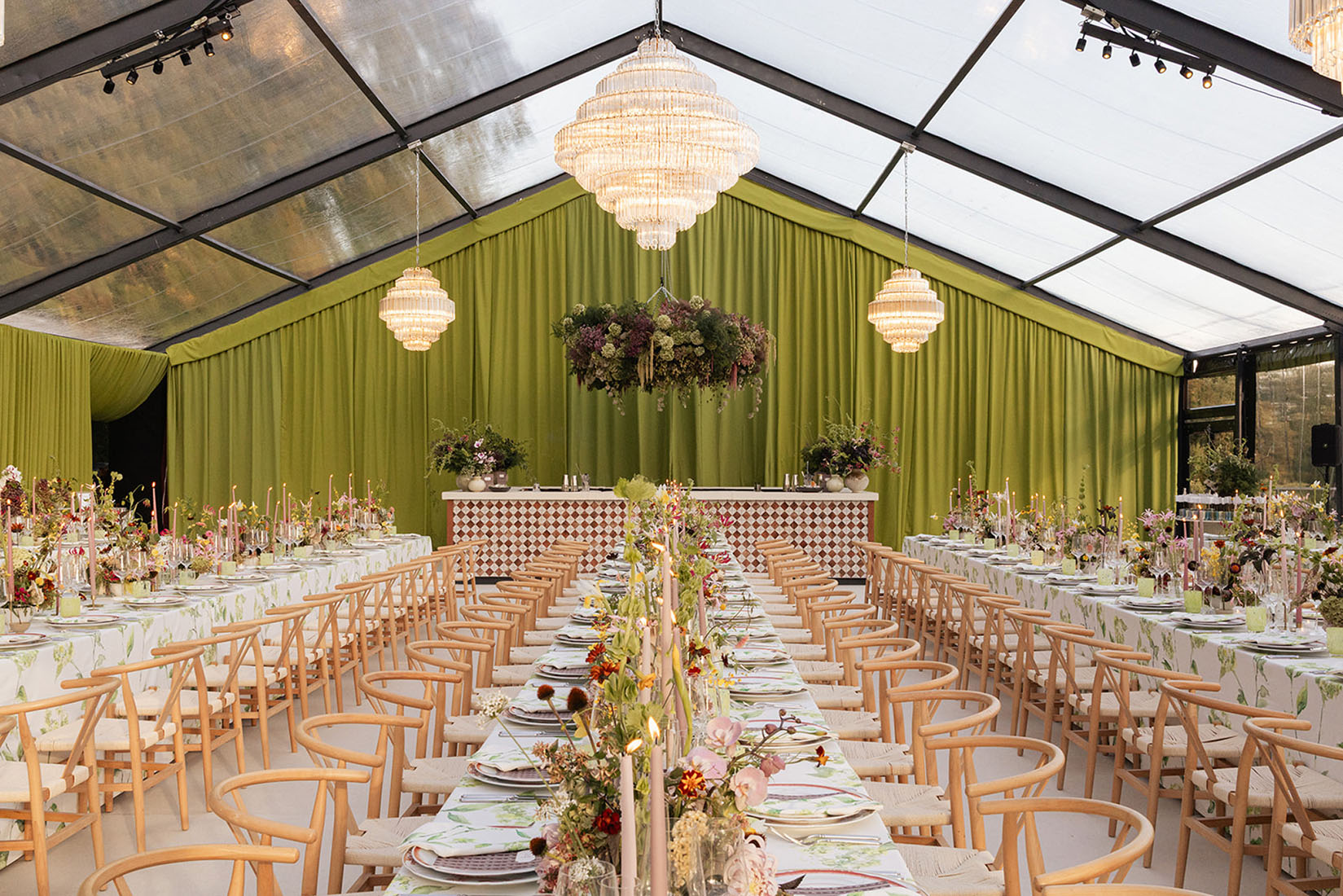
long-table dinners designed for conversation rather than spectacle, interiors that feel layered and lived-in rather than overly styled, weekends paced slowly enough for people to truly connect.
These aren’t trends in the traditional sense. They’re a response to cultural exhaustion, a quiet rejection of following the masses in favour of atmosphere, individuality and meaning. And perhaps that’s the distinction that matters most:
There’s a difference between
designing for relevance and
designing for resonance.
What We Believe
At Pocketful of Dreams, we’re just not interested in creating ‘trendy weddings’. We’re interested in creating weddings that still feel beautiful twenty years from now. Celebrations rooted in heritage, atmosphere, emotion and memory. Shaped by interiors, landscape and personality rather than aesthetics chosen simply because they’re currently circulating online.
The most immersive and emotional weddings we’ve ever designed have rarely been the loudest. They’ve been the ones that felt deeply lived-in and intensely personal, where guests relaxed immediately, where the details felt instinctive, where the design reflected the couple rather than the cultural moment.
They feel less like productions and more like stepping into someone’s world: a world that is warmly welcoming, multi-layered and exquisitely effortless. The kind of events where every detail has meaning, but none of it feels forced.
The Return of Permanence
Broader culture seems to be moving in this direction too. Fashion is shifting away from obvious trend cycles toward longevity and personal style. Interiors are embracing craftsmanship, tactility and emotional resonance over perfection. Even luxury itself is being redefined, not as excess, but as authenticity and ease.
Vogue has called this movement a rejection of “aesthetic overload.” The Financial Times has written about the rise of permanence over performance. More and more people are craving spaces and experiences that feel grounding again. And weddings are no exception.
Why Authenticity Ages Better Than Trends
The weddings that endure are rarely the ones chasing relevance. They are the ones brave enough to feel personal: a family recipe served at midnight, tables designed around conversation rather than spectacle, music that actually means something, a ceremony shaped by heritage.
Those things never date. Because authenticity carries emotional permanence.
The Considered Way
Our philosophy: The Considered Way, was never built around trends. It was built around people: How they gather, how they feel, what they remember.
Yes, we care deeply about beauty, but beauty without meaning is fleeting. What we design are not Pinterest weddings frozen in time. They are immersive, emotionally intelligent celebrations designed to feel deeply relevant to the people inside them, rather than just the cultural moment surrounding them.
And perhaps that’s the real definition of cool after all: Not in following the cultural moment because that is what is considered ‘cool’, but in knowing yourself well enough to know you don’t need to.
Image Credits: Dosmasenlamesa
Pocketful of Dreams is a luxury wedding and event planning studio based in the UK, working across London, the Cotswolds, Hampshire, Suffolk and beyond. Established in 2010 by creative director Michelle Kelly, we specialise in destination weddings in England, multi-day full weekend celebrations, marquee and at-home weddings, and private-estate events that blend refined design with effortless flow.
Our ethos is rooted in creating experiences that feel authentic, immersive and quietly luxurious, celebrations that bring people together through beauty, atmosphere and meaning.
Book a consultation to begin planning your celebration with us.
Read more:
The Planners Playbook: How to plan the Ultimate Wedding Weekend
The Power of Gathering: Why Human Connection Is the True Luxury